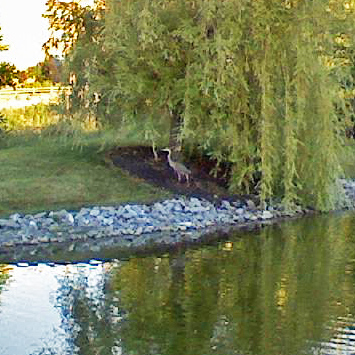


After a few minutes of shelter beneath the leaves, he emerged, and I was able to capture the above image with a cell phone camera which is always wide-angle. The heron was about 80 feet away, very safe in his opinion, but difficult photographically. His behavior was to examine some twigs along the rocky shore.
Suddenly, and not because he was startled, the heron took off and landed at the south end of the lake. The camera has a two-second shutter delay while it automatically focuses, so I just held the button and waited. Click to see a panoramic rendering of the scene. This is proof that birdwatchers who prefer the artistry of wide-angle lenses do not always miss out on unexpected "Kodak moments."

Our temporarily resident Great Blue Heron offers you a marvelous opportunity to study his beauty and behavior. He stands about four feet tall and has an impressive seven-foot wingspan. His diet is mainly fish and other small acquatic creatures. When in flight, look for the field mark of its head folded back on its shoulders. Keep your distance and watch carefully through field glasses, and you will be rewarded.
Hopefully, other residents with longer lenses will record close-up portraits for all of us to enjoy.